


Hit enter to search or ESC to close
Share with
Garage Dimensions & Sizes Guide
27 June 2023
Choosing the right garage dimensions ensures you have enough space for your vehicles whilst avoiding an oversized build that costs more than necessary. Standard garage sizes in Australia range from 3.5m x 6m for a single car through to 12m x 6m for four vehicles, but the dimensions that work for your property depend on what you're parking, how you'll use the space, and what your local council permits.
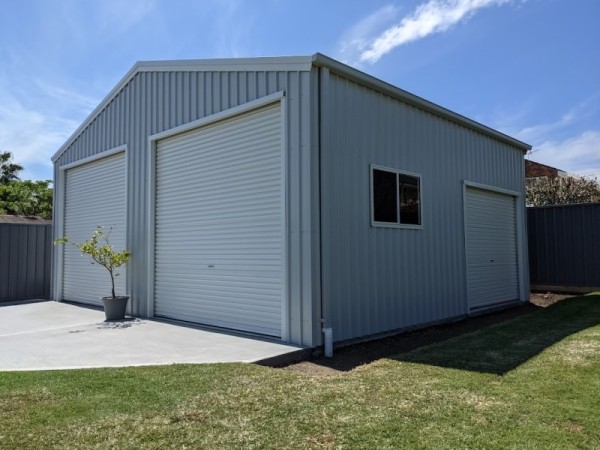
Getting garage sizes right from the start saves you from cramped parking, difficult door opening, or realising later you should have built bigger. Fair Dinkum Builds designs every garage to your specific requirements, whether you need a standard double garage or a custom build for multiple vehicles, workshop space, or extra storage space. Request a quote to discuss the dimensions that suit your property and vehicles.
Standard Garage Sizes in Australia
Here are the most common garage dimensions used across Australia, showing both Australian Standards minimums and recommended averages:
| Garage Type | Width (Min / Average) | Length (Min / Average) | Height (Min / Recommended) | Standard Roller Door Size |
|---|---|---|---|---|
| Single garage | 3m / 3.5m | 5.4m / 6m | 2.1m / 2.4m | 2.4m wide x 2.1m high |
| Double garage | 5.4m / 6m | 5.4m / 6m | 2.1m / 2.4m | 4.8m wide x 2.1m high (or two 2.4m doors) |
| Triple garage | 9m | 6m | 2.1m / 2.4m | Three 2.4m doors or combination |
| Four-car garage | 12m | 6m+ | 2.1m / 2.4m+ | Four 2.4m doors or two 4.8m doors |
The minimum dimensions listed come from Australian Standard AS 2890.1, which sets baseline requirements for vehicle accommodation spaces. The average dimensions reflect what most customers actually build, adding comfortable clearance for daily use. Fair Dinkum Builds designs to your specific needs rather than forcing you into rigid standard garage sizes, so you get dimensions that work properly for your vehicles and site.
Single Garage Dimensions
A single garage measures minimum 3m x 5.4m per AS 2890.1, with the average build being 3.5m x 6m. Height sits at 2.1m minimum, though 2.4m is recommended for comfortable clearance. This size suits one sedan or hatchback with room to open doors and walk around the vehicle.

Where single garages get tight is with larger vehicles or when you want storage alongside parking. The 3m width leaves minimal side clearance if you drive a ute or 4WD, making entry and exit more precise. Most customers with these vehicles go 3.5m to 4m wide to make daily use comfortable. The 6m length works for most passenger vehicles but feels restricted if you need to store items at the front or rear.
A single garage makes sense when you have one vehicle to protect, limited property space, or budget constraints. Adding extra width costs less than you might expect and significantly improves how the garage functions. Visit our single garage page to see configuration options.
Double Car Garage Dimensions
A double car garage measures minimum 5.4m x 5.4m per Australian Standards, with the average build being 6m x 6m. This is the most common for residential garage sizes in Australia. The dimensions fit two standard vehicles side by side with door-opening clearance between them and adequate space from the posts on each side, making it ideal for households with more than one car.

For larger vehicles like utes, 4WDs, or dual-cab trucks, most customers increase width to 6.5m or 7m. The extra width makes parking easier, gives more room between vehicles, and creates space for storage or workshop activities. Some people use one bay for parking and dedicate the other to storage, tools, or equipment. The 6m length suits standard vehicles, though you might extend to 7m or 8m if you have long vehicles or want front and rear storage.
Double garages are the most popular choice because they suit two-vehicle households whilst fitting on typical residential blocks without dominating the property. The size provides flexibility for current needs and future uses. Check out our double garage page for design ideas.
Triple Garage Dimensions
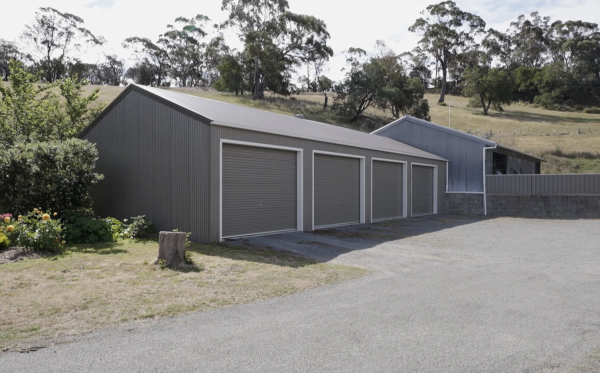
A triple garage averages 9m wide by 6m long. This configuration provides space for three vehicles parked side by side or two vehicles with a dedicated workshop or storage bay. Triple garages are common for families with a third vehicle or those wanting substantial covered workspace alongside vehicle parking.
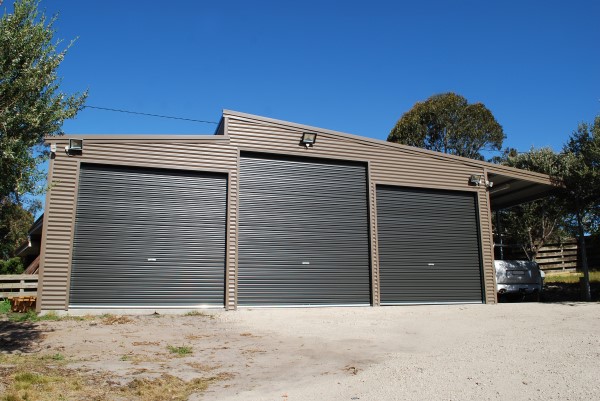
The extra bay offers flexibility for various uses. Some people park three cars, others use two bays for vehicles and one as extra space for storage, workshop activities, or hobby space. Rural properties often choose triple garages to house a mix of cars, utes, and equipment under one roof. The additional space means you can accommodate future needs without requiring another building project.
The 9m width requires adequate space on your property and may trigger council approval requirements depending on your location. Your Fair Dinkum Builds representative will confirm what's possible for your site. See our triple garage page for examples.
Four-Car Garage Dimensions
A four-car garage starts around 12m wide by 6m long for a side-by-side layout, though dimensions vary significantly based on specific requirements. This is always a custom garage build because needs differ greatly between properties. Four-car garages suit larger families with multiple drivers, rural properties housing vehicles and machinery, or properties doubling as home and workspace.
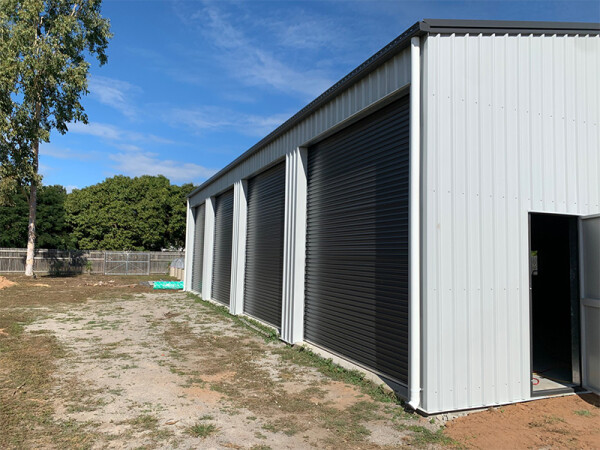
Layout options include four bays in a row or a 2x2 tandem configuration. Four bays side by side work when you have the width available and want easy access to all vehicles. A 2x2 tandem layout suits narrower sites and reduces overall width whilst increasing depth. The tandem setup means front vehicles need to move if you want to access rear vehicles, so choose based on your parking patterns and site shape.
Height and length often increase on four-car builds because these structures typically house mixed vehicle types. You might have passenger cars in some bays and utes or vans in others, requiring clearance for the tallest vehicle. Length might extend to 7m or 8m if you're storing work equipment, have long-wheelbase vehicles, or want integrated workshop space. Four-car garages are common on larger residential blocks, rural properties, and amongst hobby car owners who need substantial covered parking. Visit our four-door garage page to explore options.
How Vehicle Size Affects Your Garage Dimensions
Average Vehicle Measurements
An average sedan measures roughly 4.5m long and 1.8m wide, which forms the baseline for single car garage dimensions. However, SUVs, utes, 4WDs, and dual-cab utes change the equation significantly. A dual-cab ute might measure 5.3m long and 1.8m to 2.1m wide including mirrors. Large SUVs push similar dimensions or larger.
Recommended Clearance
You need 300mm per side minimum for comfortable door opening. This gives you room to exit the vehicle without scraping doors on posts or catching them on walls. Most customers find 400mm to 500mm per side more practical, especially with children who swing doors open or when loading items into the vehicle whilst parked.
Add 600mm to 900mm front and back for access. This clearance lets you walk around the vehicle, provides buffer room for parking, and creates space for front or rear storage if needed. Some people extend length further to store bicycles, tools, or outdoor equipment at one end.
External vs Internal Measurements
Garage dimensions are typically measured externally, from the outside of the frame. Wall thickness reduces internal space by approximately 150mm to 200mm per wall, depending on construction. A 6m x 6m external measurement might give you 5.7m x 5.7m internal space once walls are accounted for. Factor this difference when calculating whether your vehicle and clearance requirements fit.
Garage Height: Why It Matters More Than You Think
Minimum vs Practical Height Standards
2.1m is the minimum height per Australian Standards, but 2.4m is the practical standard most customers choose. The extra 300mm makes daily use more comfortable and accommodates varying vehicle heights without scraping roof racks or antennas.
When to Go Higher
You go higher than 2.4m when you drive 4WDs with roof racks, plan to install a vehicle hoist, want mezzanine storage above parking areas, or intend to use part of the garage as a workshop with overhead tool storage. Some customers building for commercial vehicles or those who anticipate larger vehicles in future go to 3m or higher.
How Roof Style Affects Headroom
Gable roofs give more headroom in the centre where the two slopes meet at the ridge. The peak height sits higher than the eave height, providing maximum clearance for taller vehicles parked in the centre bay. This works particularly well for double garages or triple garages.
Skillion roofs vary from high to low end. If you specify 2.4m clearance, that's typically measured at the low end, and the high side will be taller depending on the roof pitch. Position taller vehicles under the high side for maximum clearance.
Flat roofs maintain consistent height across the entire span. What you specify is what you get from one side to the other, making flat roofs predictable for clearance calculations.
For more details on how roof styles affect aesthetics and functionality, read our article on gable vs skillion roof sheds. If you're considering mezzanine storage, see our page on garages with mezzanine floors.
Roller Door Sizes and How They Relate to Garage Dimensions
Standard Door Dimensions
A standard single roller door measures 2400mm wide x 2100mm high. This fits most passenger vehicles with adequate clearance. A standard double roller door measures 4800mm wide x 2100mm high, providing a wide opening for two-vehicle access or single access with extra width for larger vehicles.
Wider and Taller Options
Wider garage doors suit larger vehicles or when you want generous entry clearance. Some customers choose 2700mm or 3000mm wide doors for single garages housing utes or SUVs. Taller garage doors accommodate high-roof vehicles, 4WDs with roof racks, or situations where you want overhead clearance for accessing roof-mounted storage whilst parked inside.
Door Width and Bay Width Connection
The roller door width directly affects how much internal bay width remains for vehicle clearance. If your garage is 3.5m wide internally and you install a 2400mm wide door, you have roughly 550mm total for both side clearances combined (less 150mm to 200mm for the door installation space). This connection between door width and internal dimensions determines how comfortable parking and access will be.
Installation Clearance Requirements
Roller doors need side room and headroom for installation. Side clearance of 100mm per side accommodates the door tracks. Headroom above the door opening accommodates the rolled-up door, typically requiring 400mm to 500mm of clear space. Factor these installation requirements when determining final garage dimensions and door placement.
Sizing Your Garage for More Than Just Cars

Workshop Space Requirements
A workbench along the wall adds 600mm to 900mm of needed depth beyond what your vehicle requires. If you want a dedicated workshop bay alongside parking, you need a full extra bay width. This typically means choosing a double garage when you have one vehicle or a triple garage when you have two vehicles to accommodate both parking and workshop activities.
For detailed information on combining garage and workshop space, visit our workshop shed page.
Storage Area Dimensions
Extra storage for tools, equipment, outdoor gear, or seasonal items requires additional width or length beyond vehicle parking needs. Adding 1m to 1.5m of length gives you front or rear storage. Adding width for side storage depends on what you're storing, but 600mm to 1m typically accommodates shelving, tool cabinets, or equipment racks.
Home Gym and Hobby Space
A home gym area requires floor space for equipment plus movement room. Typical setups need 3m x 3m minimum for basic equipment like a bench, weights, and cardio machine. Hobby spaces vary by activity but generally need similar dimensions. If you're planning to use part of your garage for these activities, add the required floor area to your vehicle parking dimensions.
Lean To Extensions
A lean to can add covered storage or workspace without increasing the enclosed garage footprint. The lean to attaches to one side of the garage, providing weather-protected area for items that don't need full enclosure. This works well for storing outdoor equipment, providing covered workspace, or creating additional parking under a roof without the cost of full garage walls. See our page on garages with lean to for configuration options.
Does Garage Size Affect Council Approval?
How Size Affects Approval Requirements
Larger footprint garages affect site coverage ratios, which many councils regulate as a percentage of total block size. A bigger garage might push you over the allowed site coverage, requiring planning approval rather than complying development. Boundary setbacks also matter, as larger garages sit closer to boundaries or require more setback distance depending on council rules.
State Requirements and Thresholds
Most states require approval for garages, though exemptions exist under certain conditions. Size often determines whether you qualify for an exemption or need full approval. Some councils exempt garages under specific square metres, heights, or distances from boundaries. Exceeding any threshold triggers the approval requirement.
Connection to Planning Process
The connection between size and approval type varies by state and council. Smaller garages might qualify for complying development or exempt development, while larger builds require development approval with plans, engineering documentation, and waiting periods. Your Fair Dinkum Builds representative knows local requirements and can guide you through what your chosen dimensions require.
For detailed state-specific information:
- Do you need council approval for a garage in NSW?
- Do you need council approval for a garage in QLD?
- Do you need council approval for a garage in Victoria?
- Do you need council approval for a garage in SA?
- Do you need council approval for a garage in WA?
- Do you need council approval for a garage in TAS?
Garage vs Carport: When a Smaller Garage Makes More Sense
Budget and Site Considerations
If vehicle protection is the priority but budget or site space limits your options, a carport may do the job. Carports cost less to build than fully enclosed garages because they use less material and simpler construction. A double carport provides weather protection for two vehicles at roughly half the cost of a double garage.
Split Solutions
If you need both enclosed and open shelter, a garaport or garage with lean to splits the difference. A garaport combines an enclosed garage section with an attached carport under one roofline. You get secure storage for valuables and weather protection for additional vehicles or equipment. This configuration works well when you have one vehicle worth fully enclosing and others that just need roof cover.
When Garages Make Sense
Choose a garage over a carport when you need security for tools and equipment, want climate control for workshop activities, need to comply with heritage or aesthetic requirements, or want the additional living space a garage provides. Garages add more value to properties than carports in most markets.
For detailed comparison, read our article on carports vs garages. To explore combined solutions, visit our garaport page.
FAQs
What is the minimum garage size allowed in Australia?
The minimum garage size allowed in Australia follows AS 2890.1, which specifies 3m width and 5.4m length for a single car garage, with a minimum door width of 2.4m. For a double garage, the minimum is 5.4m width and 5.4m length, with a minimum door width of 4.8m. These are minimums for basic vehicle accommodation and don't include clearance for comfortable door opening or storage. Most customers build larger than these minimums for practical daily use. Your local council may have additional requirements or restrictions, so always check local regulations before finalising dimensions.
Are garage dimensions measured internally or externally?
Garage dimensions are typically measured externally, from the outside of the frame or wall structure. Wall thickness reduces internal space by approximately 150mm to 200mm per wall depending on construction method and materials. This means a 6m x 6m external measurement might give you 5.7m x 5.7m of usable internal space once you account for wall thickness. When planning vehicle clearance and parking, work from internal dimensions to ensure you have adequate room. Your Fair Dinkum Builds representative can clarify exact internal dimensions for your specific garage design so you know precisely how much space you'll have inside.
How wide does a garage need to be for a dual-cab ute?
A dual-cab ute typically measures 1.8m to 2.1m wide including mirrors, depending on the model. For comfortable access, you want 300mm minimum clearance per side, which puts a single garage at 2.4m to 2.7m internal width minimum. Most customers build 3.5m to 4m wide to accommodate dual-cab utes comfortably. This provides adequate room for door opening, walking around the vehicle, and avoiding precise parking every time. If you're building a double garage for two dual-cab utes, go for 7m to 7.5m width internally to ensure enough space between vehicles and adequate clearance from the walls. Consider vehicle length too, as dual-cabs often measure 5.3m to 5.5m long, requiring 6m to 6.5m garage length for front and rear clearance.
Can I build a garage right up to my property boundary?
Building a garage right up to your property boundary depends on your state and local council regulations. Most councils require setbacks from boundaries, typically ranging from 450mm to 1m or more. Some councils allow building on the boundary under specific conditions, such as when the structure is under a certain height or when you have an agreement with the adjoining property owner. Height restrictions often apply to boundary structures, and you may need to meet fire rating requirements for walls on or near boundaries. Always check with your local council before planning garage placement. Your Fair Dinkum Builds representative can help you understand the setback requirements for your specific location and design the garage to comply with local regulations whilst maximising usable space on your property.
Is it cheaper to build a bigger garage upfront or extend later?
Building a bigger garage upfront is almost always cheaper than extending later. When you build the right size initially, you pay once for site preparation, concrete slab, engineering, council approvals, and installation. Extending later means repeating many of these costs, plus you'll pay to connect the extension to the existing structure, match materials and colours, and potentially upgrade the original structure to support the extension. The per-square-metre cost of building larger initially is typically 30% to 50% less than adding an extension after the fact. If you're uncertain about size, err on the side of slightly larger rather than smaller. The additional upfront cost of extra width or length is modest compared to the expense and disruption of extending later. Consider future needs like additional vehicles, workshop space, or storage requirements when determining initial dimensions, as building for these now saves money long-term.
Quality Garages from Builders You Can Trust
Fair Dinkum Builds has designed and built thousands of garages across Australia since 2007. Our network of local experts understands regional requirements, site conditions, and what works in different climates. Every garage gets engineered to code with a 30-year system warranty covering wind resistance and structural performance.
If you're ready to build a garage with dimensions that suit your vehicles, storage needs, and property, contact your local Fair Dinkum Builds team for a quote. We'll discuss your requirements, confirm what's possible on your site, and design a structure with the right dimensions rather than forcing you into standard sizes that don't quite fit.