


Hit enter to search or ESC to close
Share with
Building a Garage on a Sloping Block
7 January 2026
Building a garage on flat land is one thing. But when your site slopes, what should be a relatively straightforward process suddenly opens up a whole new set of challenges. That doesn’t mean it’s impossible to build a shed on sloping ground; it just requires a bit more thought, creativity, and good advice to get it right.
Whether you’ve already bought your block or you’re still weighing up your options, this guide will walk you through everything you need to know, from how slopes are measured to design approaches, council approvals, drainage, costs, and more.

Understanding Your Sloping Block
The first thing you need to do is understand the lay of the land (quite literally). Sloping sites vary in direction, shape, and how they interact with neighbouring lots. It’s more than just about how steep the ground is, and the slope could:
- Fall from street to rear (down slope)
- Rise from street to rear (up slope)
- Or even slop diagonally or unevenly across the site
Knowing the direction and degree of the slope is really important because it influences your garage design, driveway gradient, foundation type, and drainage.
How Slopes Are Measured
Slopes are measured using either a percentage or a ratio. Both mean the same thing, just expressed differently, but getting to grips with what they mean will make it much easier to visualise what you’re dealing with.
A percentage slope looks at how much the land rises or falls over a horizontal distance. For example, if your block drops one metre over ten metres of length, that’s a 10% slope. If it drops one metre over five metres, that’s a 20% slope, and so on. The higher the percentage, the steeper the land.
A ratio does the same thing, just in a more old-school building language. A 1-in-10 slope means the land changes by one metre vertically for every ten metres horizontally. A 1-in-5 slope is steeper again, and you’ll often hear this referred to when discussing driveways or access to a garage.
What Do These Measurements Matter?
Because those numbers directly influence how your garage can be designed and built. Gentle slopes can often be handled with stepped footings or minor site works. But as the percentage increases, you’re more likely to need piers, retaining walls, suspended slabs, or more complex building solutions.
Councils also pay very close attention to these measurements, particularly when it comes to driveway gradients, drainage and site stability. And, when you have a better understanding of the slope in real terms, you’re able to set realistic expectations about costs and design options.
Planning and Council Approvals
You’ll need council approval before you can start building, and this is where a lot of people get nervous. Approval timelines vary between councils, but for a sloping block, it’s not unusual for the process to take a few months, especially if you need drawings or geotechnical reports.
As part of your design, your council may ask you to address:
- Site stability and erosion control
- Stormwater and drainage plans
- Retaining wall design
- Driveway gradients
- Vegetation or environmental overlays
Because sloping blocks usually require more sophisticated design than flat sites, it’s best to engage professional help with designing the garage and navigating council approvals. It takes a lot of stress out of the process and means not having to deal with any confusing paperwork.
Garage Design Options for Sloping Blocks
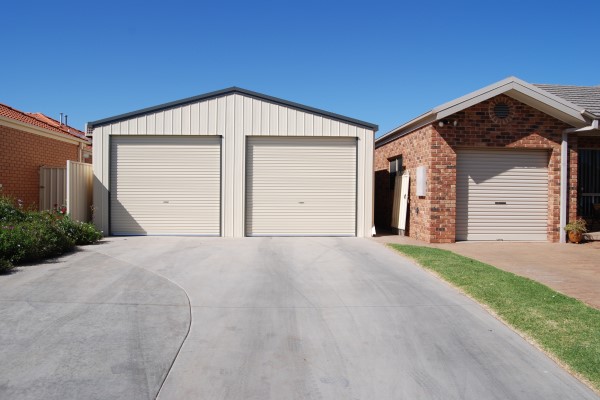
Here’s where things get interesting. A sloped site doesn’t just create constraints; it opens up design possibilities that you won’t see on flat blocks. These include:
Stepped Footing Garages
For mild to moderate slopes, a stepped footing design allows the garage floor to follow the contour of the land. This means you don’t have to level the entire site, and you reduce the need for big walls of earth retention.
Stepped footings are also great because each “step” matches the natural fall of the land, letting you build a level floor without massive excavation.
Cut-and-Fill
If you have a gentle slope, part of the hill can be cut back and the lower part filled so the garage sits on a more level platform. It’s a traditional approach, but it comes with extra earthworks and can affect drainage if it’s not done right.
It’s also important to be wary of over-cutting here, as it’s tempting to flatten everything. However, too much excavation can cause drainage headaches and destabilise the site.
Suspended Slab or Pier Garage
On steeper blocks, it’s often easier to build the garage up rather than shuffle the earth around. Suspended slabs and piers allow the garage floor to hover above ground level at one end, blending beautifully with split-level home designs and reducing the need for extensive retaining walls. This approach also helps with airflow and can create storage space underneath.
Pole or Piled Garage
For very steep terrain, pole (or piled) garages are a great option. This essentially involves placing columns into the ground to support the structure above, minimising earthworks and helping with drainage in the process.
Where to Place Your Garage
You might already have a position in mind, but where you place the garage on a sloping block changes how accessible and practical it will be. For this reason, you really need to give it a lot of thought.
If the block slopes away from the street, placing the garage at the higher end can make access easier, but you’ll need a driveway that doesn’t feel like a ski jump! If it slopes towards the street, you might be able to build the garage near street level and house the rest of your yard above it.
Some creative designs even tuck the garage under the living space as part of a split-level home plan.
Just be mindful of the driveway gradient, which affects drivability and safety. Many councils prefer a gradient of around 20% (1-in-5) for residential driveways, so getting this sorted ahead of your application can make things easier when it comes to approvals.
Foundations and Structural Considerations
Foundations are where sloping sites and flat sites really start to differ. On flat land, a simple slab-on-ground often does the job. On a slope, however, your foundation becomes more central to the whole design.
It doesn’t have to be overly complicated, though, and some common options include:
Stepped Footings
These work well on moderate slopes and keep your garage floor level while following the landfall.
Bored Piers
Ideal for steeper sites where shallow footings aren’t practical. Deep piers are installed down to stable soil, supporting the weight of the garage above uneven ground.
Slab with Edge Beams
A slab on a slope can work with reinforced edges and beams to handle differential settlement and soil pressure.
Retaining Walls and Drainage
On flat blocks, you might never give retaining walls a second’s thought. On slopes, they have a huge part to play in stabilising the earth, supporting driveways, and controlling surface water.
Where possible, keep retaining walls under 1 metre to avoid expensive engineering and approvals, and if you need taller walls, consider terraced or stepped walls so each section is smaller and more stable. Remember to work drainage into the retaining wall design, too, as walls that trap water without adequate drains can fail or cause erosion.
In fact, overall good drainage is a non-negotiable when you’re building a garage on a slope. Water likes to find its way downhill, and without proper management, that runoff can pool at your garage door, erode footings, or put pressure on walls.
Likewise, you’ll need to think about surface and subsoil drainage. Grated channels across the driveway, ag-fert drains behind retaining walls, or even landscaping that directs water away from the structure are all good options.
Plan Your Garage Build Today
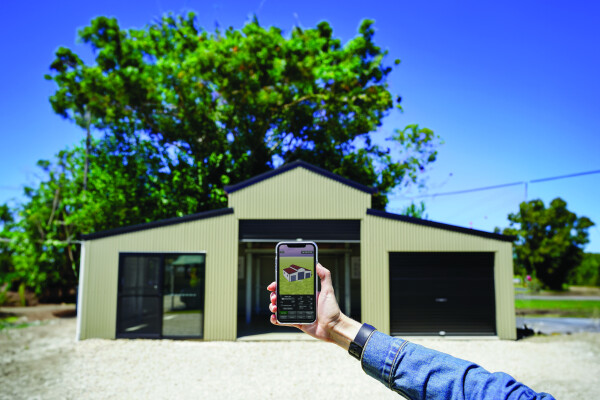
If you’re planning a garage on a sloping block, Fair Dinkum Builds makes it much easier to see what’s possible. You can use the Shed Designer App to explore different layouts and see how the design could work on your property. From there, our expert team can help with tailoring the design to your slope and even take on the council approvals process for you. Reach out today for a free quote, and let us help you create your dream garage, regardless of what kind of sloping percentage you’re dealing with.